

REVIEWED BY MARY BATATIA
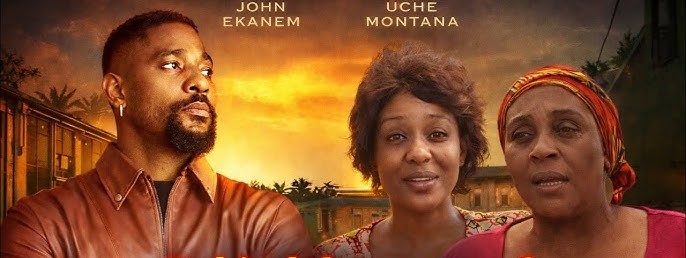
Some films entertain, while others hold a mirror up to society. Monica and its sequel fall into the latter category, presenting an emotional story about family responsibility, sacrifice, betrayal, and self-worth. Through the character of Monica, played convincingly by Uche Montana, the film explores a reality that many people, particularly firstborn children, know all too well, the expectation to carry the burdens of an entire family at the expense of one’s own happiness.
While the film follows the life of Monica, a hardworking young woman who sacrifices her dreams and happiness for her family. It’s most compelling character is arguably her mother, Mama Monica, whose actions drive the film’s central conflict and expose a reality many viewers will find painfully familiar.
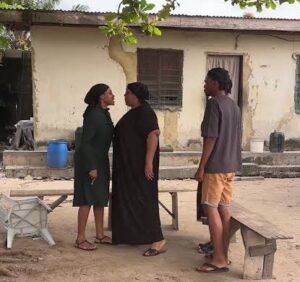
Monica is not simply a story about family sacrifice. It is a critique of the culture that places the entire weight of a family’s survival on one child, usually the eldest. Through Monica’s experiences, the film asks a difficult question, At what point does responsibility become exploitation?
Monica, portrayed by Uche Montana, the producer of the movie, is the family’s provider, problem-solver, and emotional support system. As a tailor, she works tirelessly to pay the school fees of her siblings ,settle household expenses, and care for her parents. Her sacrifices are so extensive that her own dreams and personal relationships are repeatedly pushed aside. Yet rather than being appreciated, her efforts gradually become a forced necessity.

The character that makes this theme come alive is Mama Monica, played by Blessing Onwukwe. She is both entertaining and frustrating, a woman whose humour masks a manipulative approach to motherhood. Her popular phrase, “Na me be pepper, na me be salt for this house,” provides comic relief throughout the film, but it also reflects her belief that the family revolves around first borns, be it male or female. She expects this from Monica because she also was a first born, Ada, as first borns who are females in Ibo are called. She catered for her family as an Ada when she was with her family and so, expected same from Monica as the first born of her family. She constantly reminds Monica of her obligations while ignoring the emotional and personal costs of those sacrifices.
One of the film’s most visible betrayal was seen when Monica’s younger sister, Chika, played by Ekene Onochie, begins a relationship with Pascal (John Tyler Ekanem), the man Monica once loved. That marriage was spearheaded by the same mother who disapproved it when Monica brought this very man, Pascal as the man she wanted to marry. Mama Monica disagreed with Monica’s marriage because she didn’t want Monica to marry and leave the family responsibility on her. The betrayal is devastating because it comes from a family that Monica has spent years supporting. The family she gave her all for. Instead of protecting Monica, her family expects her to absorb the pain and continue providing for everyone as if nothing happened.
The film becomes even more heartbreaking when Monica decides to leave the family home after enduring continuous disrespect from her younger brother and a lack of appreciation from her relatives. Rather than acknowledging her daughter’s pain, Mama Monica accuses her of being selfish for choosing herself. The scene perfectly captures the emotional manipulation often experienced by family breadwinners. In Mama Monica’s eyes, Monica’s desire for peace and independence is not self-care but betrayal and running away from responsibilities.
What makes the movie resonate beyond Nigeria is its universality. Although the story is rooted in a Nigerian household, similar experiences can be found across Africa and many parts of the world. In countless families, the eldest child becomes the unofficial second parent, expected to sacrifice opportunities, relationships, finances, and sometimes even personal happiness for the benefit of others. The film challenges the romanticization of such sacrifice and exposes its emotional consequences.
The sequel strengthens this message by showing Monica’s gradual realization that love should not require endless suffering. Her decision to pursue her scholarship in Paris and establish boundaries with her family represents the film’s most important lesson, supporting family should not come at the cost of one’s identity, dreams, or future.
Uche Montana delivers a convincing performance, but it is the character of Mama Monica who leaves the strongest impression. Through humor, guilt, emotional blackmail, and constant appeals to family duty, she represents the societal pressures that keep many firstborn children trapped in cycles of sacrifice. Viewers may laugh at her jokes, but they will also recognize the uncomfortable truths hidden beneath them.
Ultimately, Mama Monica is a powerful social commentary on family entitlement, parental manipulation, and the unseen burden carried by many firstborn children. It reminds audiences that while family responsibility is important, there is a difference between helping one’s family and being consumed by their expectations.
AUTHOR: MARY BATATIA